

Table of Contents
ABOUT
In the world of natural stones, few materials can rival the timeless beauty and versatility of travertine. Its rich history, unique characteristics, and wide range of applications, has made it a long time favorite among architects, contractors, designers, and homeowners alike. Travertine takes shape through the process of carbonate minerals precipitating out of solution in both ground and surface waters. This frequently occurs near the opening of geothermally heated hot springs and/or within limestone caves. Because of this, travertine is technically a type of limestone, closely related to stones like moca cream limestone and limra limestone. The stone ranks 4 on the Mohs Hardness Scale.
Interestingly, while travertine can be discovered in various locations worldwide, it is not mined everywhere. In fact, its name is rooted in the Latin word ‘tiburtinus’, signifying ‘of Tibur’ (the former name for Tivoli, an Italian locale). Ancient Roman referred travertine to as Lapis Tiburtinus, which translates to ‘the stone from Tivoli’.
Travertine has been employed in many famous architectural structures, both modern day and ancient times. For instance, in the past, it was used to construct the main pillars and walls of the Roman Colosseum. In the 1900s, it graced the renowned French tourist attraction, the Basilique du Sacre Coeur. In recent times, Chicago’s Willis Tower and Los Angeles’ Getty Center have utilized travertine, employing it for interior wall finishes and exterior facades, respectively.
CHARACTERISTICS AND BENEFITS
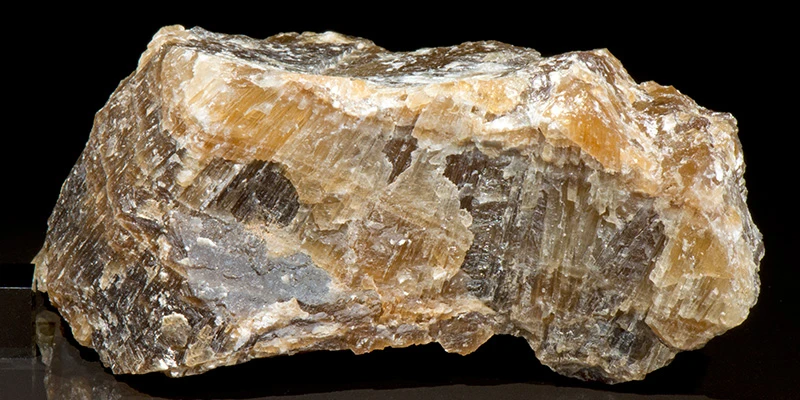
Composition and Colour: Travertine is primarily composed of calcite and gypsum, with the majority of its minerals being transparent. Only 1% of its composition contains hints of yellow sulfur, brown iron, and organic pigments, which contribute to its gentle color variations in shades like honey, beige, or pink. However, it’s worth noting that travertine can also appear in darker hues, such as brown and black.
Travertine exhibits a spectrum of colors, encompassing shades ranging from tan and ivory to warmer tones such as honey, burnt oranges, and reds. In some cases, the presence of cyanobacteria (blue-green algae) during its formation can introduce hues of green. Occasionally, travertine can even display a stunning silver variety.
Texture: The unique texture of this natural stone is attributed to its fibrous and porous nature, a characteristic partly formed by the presence of gas bubbles trapped between its layers. This creates spherical hollows, resembling pores or cavities, giving travertine its distinctive appearance.
Resistance: Travertine demonstrates exceptional resistance to bending and external factors like bending, thermal shock, corrosive agents, abrasion, and humidity. Its origin in aquifers guarantees its unwavering ability to withstand moisture. Except for polished travertine, the texture of this natural stone provides excellent slip resistance, making it an excellent option for outdoor areas.
Durability: Travertine stone has long durability, evident in centuries-old structures that remain in pristine condition. Furthermore, it maintains its color remarkably well even when exposed to UV radiation, preserving its original vibrancy, even when used outdoors.
Stability: As travertine is formed from calcium carbonate, it exhibits remarkable stability when confronted with fluctuating temperatures. Hence, for regions experiencing frequent freeze/thaw cycles, travertine proves to be a dependable choice. In hot climates like the UAE, lighter travertine also tends to stay cooler underfoot than darker paving, which is one reason it is so popular around pools and terraces.
Environmentally friendly: Manmade concrete paver products can entail extensive use of hazardous chemicals and intricate manufacturing processes. However, as a natural stone, travertine involves fewer harmful chemicals throughout its journey from the quarry to your space.
Replaceable: In the event that an individual tile becomes damaged, whether from a heavy impact or an acid spill causing surface damage, replacing the affected tiles is a relatively easy.
Cuts and Finishes:
How travertine is cut changes how it looks. Cross-cut slabs, also called fleuri cut, are sliced across the natural layers and show a soft, cloudy pattern. Vein-cut slabs are sliced along the layers and show straight, linear bands.
The finish matters too. Filled travertine has its natural holes filled with resin or cement, which gives a smoother surface that is easier to keep clean. Unfilled travertine keeps its open pores for a more natural, textured look. The surface can then be honed for a matte feel, polished for shine, or brushed and tumbled for a softer, aged look.
You can see these cuts and finishes side by side in our travertine marble collection.
DISADVANTAGES
Porous: Since travertine possesses a porous structure, particles like dirt, dust, and grime can become trapped within its pores, leading to unsightly stains over time. Additionally, acidic substances such as coffee, juice, wine, soda, and tomato sauce can stain and damage the travertine surface. Fortunately, this can easily be addressed through routine cleaning and application of a natural stone sealer.
Maintenance: Travertine is low maintenance due as no harsh chemicals (example, bleach, vinegar or other acidic products) are required to clean the stone. A simple solution of soap and water is usually sufficient. However, to safeguard against staining, it’s advisable to apply a sealant to the travertine. Periodic resealing, typically every couple of years depending on the chosen product, becomes a necessary part of the maintenance routine. This, admittedly, can become somewhat tiresome and expensive over time.
WHY IS IT USED IN ARCHITECTURE AND DESIGN
Travertine, a natural stone, possesses a distinctive charm and character that are truly unmatched. Its vast spectrum of colors and patterns makes it adaptable to a diverse range of design aesthetics, ensuring it remains eternally stylish. It also has a variety of applications, like, countertops, backsplashes, fireplace surrounds, showers, ceilings, floors, patios, pool decks, walls and so on. Moreover, its inherent qualities and advantages solidify its position as a favored option. Nonetheless, it does come with its drawbacks, which can be effectively managed through consistent maintenance. If you would like to see travertine in person, Al Asal Marbles, one of the biggest marble suppliers in the UAE, keeps a wide range in stock at our Sharjah stockyard.